
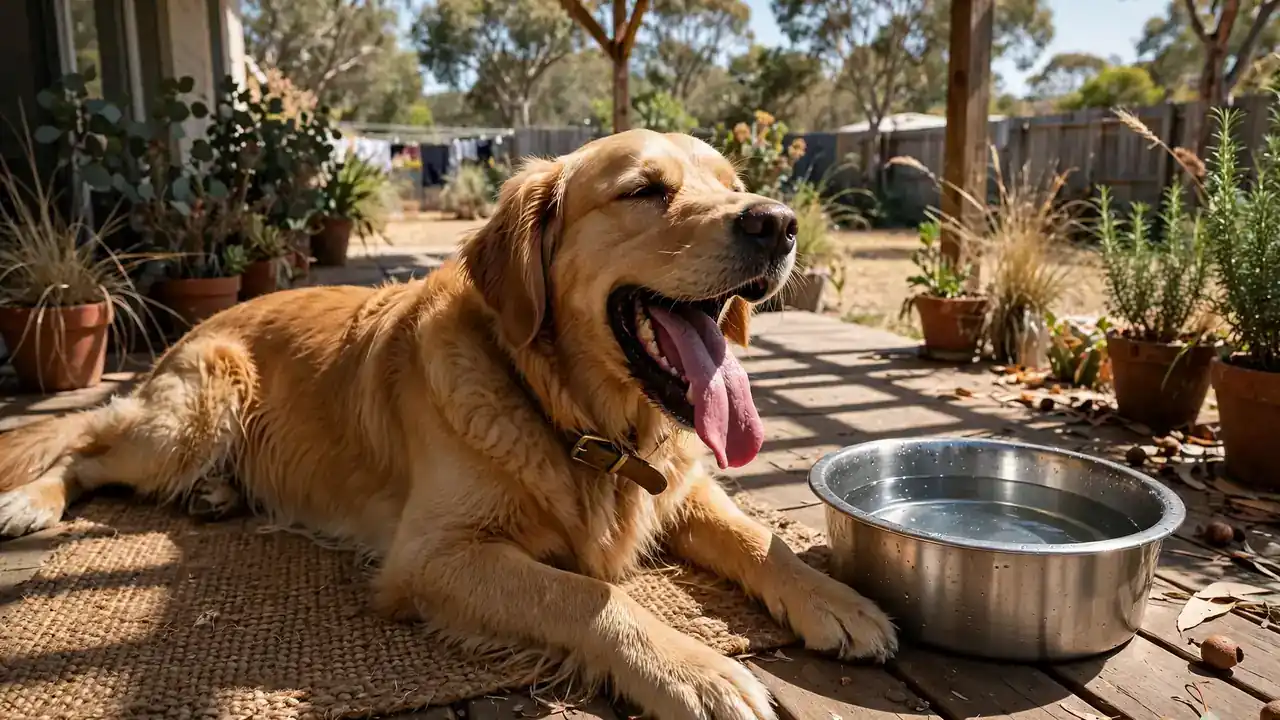
This article is general information only and not veterinary advice. Heatstroke is a life-threatening emergency — if your dog shows signs of heatstroke, begin cooling immediately and get to a vet as fast as possible. Call ahead so the clinic is ready.
Heatstroke in dogs Australia is one of the most preventable — and most fatal — emergencies Australian vets see every summer. Dogs can’t sweat like we do; they rely almost entirely on panting to dump heat, and panting fails when the air itself is hot, humid, or still. A dog’s normal temperature sits around 38.3–39.2°C. At 41°C, organ damage begins. At 43°C, it can be fatal within minutes. On a 35°C day, the inside of a parked car hits 50°C+ in minutes — and every summer, dogs die in cars while owners “just pop in for a moment”. This guide covers prevention first, because the best heatstroke treatment is never needing it — then the exact first aid steps if the worst happens.
Why Dogs Overheat So Easily
Understanding the mechanism makes the prevention obvious. Dogs lose heat through panting (evaporating moisture from the tongue and airways) and minimally through paw pads. When ambient temperature approaches body temperature, panting can’t shed heat faster than the body generates it — especially during exercise. Humidity makes it worse by slowing evaporation. Add a thick coat, excess weight, or a flat face, and the margin shrinks further. Unlike humans, dogs can’t tell you they’re in trouble until they’re already in crisis — heavy panting is normal in heat, but the line between “hot dog” and “dying dog” is crossed silently and fast.
High-Risk Dogs: Know If Yours Is Vulnerable
- Brachycephalic (flat-faced) breeds — pugs, French bulldogs, British bulldogs, boxers, shih tzus, cavaliers. Their compromised airways make panting inefficient. These breeds can develop heatstroke in conditions other dogs tolerate easily — even in the low 20s with exercise.
- Overweight dogs — extra insulation, extra heat generation, reduced fitness. Weight loss is heatstroke prevention.
- Very young puppies and senior dogs — poor thermoregulation at both ends of life.
- Thick-coated breeds — huskies, malamutes, chows, Newfoundlands. (Don’t shave double coats — the undercoat insulates against heat too; keep them cool instead.)
- Dogs with heart disease, laryngeal paralysis or breathing issues — ask your vet for a personalised summer plan.
- Dark-coated dogs — absorb more radiant heat in direct sun.
If your dog is in any of these categories, your summer management needs to be stricter than average — and you should discuss a heat plan with your vet before summer, not during it.
Heatstroke in Dogs Australia: Prevention Rules for Summer
Exercise timing is everything
Walk early morning or late evening — never in the middle of the day in summer. The “five-second rule”: press the back of your hand to the pavement for five seconds; if it’s too hot for you, it’s too hot for paws (burnt paw pads are a separate summer emergency). On extreme heat days, skip the walk entirely — a missed walk never killed a dog; a midday summer run has. Mental enrichment (puzzle feeders, training games) replaces physical exercise on hot days.
Water, shade, airflow — everywhere, always
- Multiple water bowls in shade, refreshed through the day. Add ice cubes on hot days. A knocked-over single bowl on a 40°C day is an emergency in waiting.
- Shade all day: track the sun — a yard shady at 9am can be an oven at 2pm. Dogs need shade that lasts the whole day, or indoor access.
- Never leave a dog in a parked car. Not with windows cracked, not “for five minutes”, not ever. Interior temperatures kill in minutes. If you see a dog in a hot car, note the details and call authorities immediately.
- Cooling aids: cooling mats, damp towels to lie on, paddling pools in shade, frozen Kongs and ice blocks with treats frozen inside. Misting systems on patios help enormously.
- Indoor access on extreme days: when it’s 40°C+, the safest place for most dogs is inside with aircon or fans. Outdoor-only dogs need a genuinely cool retreat — not a metal kennel in the sun.
Grooming and coat
Keep coats clean and de-matted (mats trap heat), but don’t shave double-coated breeds — the coat insulates against heat as well as cold, and shaving exposes skin to sunburn. Regular brushing that removes loose undercoat does more for cooling than clipping.
Recognising Heatstroke in Dogs Australia: The Signs in Order
Heatstroke progresses through stages — catching it early is the difference between a scare and a tragedy:
- Early: heavy, rapid panting; drooling; bright red tongue and gums; restlessness; seeking shade or water urgently.
- Moderate: thick, sticky saliva; vomiting; diarrhoea (sometimes bloody); wobbliness, lack of coordination; rapid heartbeat.
- Severe: glazed eyes; dark red or purple gums; collapse; seizures; unconsciousness. This dog may die without immediate action.
Any dog showing moderate signs needs active cooling and a vet now. Don’t “wait to see if the panting settles” — heatstroke damage compounds by the minute, and dogs can deteriorate after initial improvement (delayed organ damage is common, which is why every heatstroke case needs vet assessment even if the dog seems to recover). When in doubt, start cooling — you lose nothing by cooling a merely hot dog, but you lose everything by waiting on a heatstroke case.
Heatstroke in Dogs Australia First Aid: Exactly What to Do
Step 1: Move the dog to shade or air conditioning immediately. Stop all activity.
Step 2: Begin active cooling — cool (not ice-cold) water. Pour cool water over the body, focusing on the neck, armpits and groin where blood vessels run close to the surface. Apply damp towels, replacing them frequently (a towel left in place traps heat — swap every few minutes). A fan blowing over the wet dog dramatically improves cooling. Offer small amounts of cool water to drink — don’t force it.
Step 3: Transport to the vet immediately — keep cooling on the way. Wet towels, aircon blasting, windows down. Call ahead so the clinic prepares, and have someone ready to carry the dog straight in on arrival — every minute in the car park is a minute of ongoing damage.
Step 4: At the vet, expect: IV fluids, active cooling monitoring, blood tests for organ damage and clotting problems, and often 24–48 hours of hospitalisation even for dogs that “look fine” — because kidney failure, liver damage and clotting disorders can appear days later.
What NEVER to do
- Never use ice or ice water. Extreme cold constricts blood vessels and shunts hot blood to the core — the opposite of what you want. It can also cause shock. Cool water, not cold.
- Never cover the dog in a wet towel and leave it. The towel heats up and becomes an insulating blanket. Either keep replacing towels or skip them for running water + fan.
- Never force water into the mouth of a collapsed or semi-conscious dog — aspiration risk.
- Never “wait and see”. Every minute of hyperthermia increases organ damage. Cool first, vet immediately.
- Never assume recovery means safety. Delayed complications (kidney failure, DIC/clotting disorders) kill dogs days after apparent recovery. Every heatstroke case needs vet monitoring.
After a Heatstroke Episode: Recovery and Follow-Up
Dogs that survive heatstroke need follow-up blood tests over the coming days to check kidney and liver function and clotting. Some develop ongoing kidney disease. Your vet will advise on rest, monitoring and rechecks — follow it meticulously. And critically, review what went wrong: a dog that’s had heatstroke once is at higher risk of recurrence, so the prevention plan needs upgrading, not just repeating.
Special Situations
- Exercising with your dog in summer: carry water and a collapsible bowl on every walk; watch for the early signs; brachycephalic breeds should exercise minimally on warm days. Dog sports and beach runs need strict heat management.
- Travelling: never leave dogs in cars at rest stops; plan for shade and water at destinations; consider a car thermometer so you actually know the temperature.
- Power outages in heatwaves: have a plan — wet towels, car aircon, a friend’s house. Indoor dogs in a 45°C house with no airflow are at risk too.
- Working dogs: farm and working dogs are high-risk due to exertion + heat. Work them at dawn, rest in the heat of the day, water constantly. Watch for the subtle early signs in stoic working breeds — they hide distress longer, so check gums and breathing proactively during work.
Build your pet first aid kit before summer, learn the signs of pain and distress, and know your nearest emergency vet — preparation is the whole game.
Heatstroke in Dogs Australia: What Happens at the Vet
Knowing what to expect at the clinic helps you make fast decisions on arrival. The vet team will: assess temperature, mentation and perfusion immediately; continue active cooling with temperature monitoring (cooling stops around 39.5°C to avoid overshooting into hypothermia); place an IV catheter and start fluids to support circulation and kidneys; run bloodwork — clotting times, red cell counts, kidney and liver values, blood gases; treat complications as they emerge (seizures, arrhythmias, clotting failure); and hospitalise for 24–72 hours of monitoring even when the dog looks recovered. That last point surprises owners most: the dog that walks out wagging still needs serial blood tests over the coming days, because disseminated intravascular coagulation (DIC) — a catastrophic clotting disorder — and acute kidney injury can declare themselves 24–72 hours after the event. Your vet will schedule recheck bloods at 24, 48 and 72 hours; keep every appointment even if the dog seems perfect. The bill for heatstroke treatment can easily run into the thousands — Australian emergency hospitalisation typically costs $500–$2,000+ per day, so a 24–72-hour stay plus blood tests and monitoring commonly reaches $2,000–$6,000+ — one more reason prevention, shade, water and never leaving dogs in cars is worth more than any insurance policy.
FAQs: Heatstroke in Dogs Australia
What are the first signs of heatstroke in dogs?
Heavy rapid panting, drooling, bright red tongue and gums, restlessness and urgently seeking shade or water. These progress to thick sticky saliva, vomiting, wobbliness, then glazed eyes, dark red/purple gums, collapse and seizures. Act at the first signs — don’t wait for collapse.
What should I do if my dog has heatstroke?
Move to shade immediately, cool with cool (not ice-cold) water poured over the body — especially neck, armpits and groin — use a fan, offer small amounts of water, and transport to a vet immediately while continuing to cool. Call ahead. Every heatstroke case needs vet assessment even if the dog seems to recover, as organ damage can appear days later.
Can I put ice on an overheated dog?
No — never use ice or ice water. Extreme cold constricts blood vessels, trapping heat in the core, and risks shock. Use cool water, damp towels (replaced frequently), and airflow from a fan. Cool, not cold, is the rule.
How hot is too hot to walk my dog?
As a guide: above 30°C air temperature is risky for most dogs; above 35°C, skip walks. Brachycephalic breeds, puppies, seniors and overweight dogs need lower thresholds. Always do the five-second pavement test — if the ground burns your hand, it burns their paws. Walk early morning or late evening in summer.
Can dogs get heatstroke indoors?
Yes — a poorly ventilated house, garage or crate in a heatwave can be lethal, especially for brachycephalic breeds. Indoor temperatures above 30°C with no airflow are dangerous. Ensure ventilation, fans or aircon, and constant water access. Never confine a dog to a hot room, car or unventilated space.
Which dog breeds are most at risk of heatstroke?
Flat-faced (brachycephalic) breeds — pugs, French and British bulldogs, boxers, shih tzus — are at highest risk due to inefficient panting. Also vulnerable: overweight dogs, thick-coated breeds, very young or senior dogs, dark-coated dogs, and dogs with heart or breathing conditions.
Summer safety essentials: flea, tick and worming schedule, tick paralysis guide, emergency vet costs. RSPCA summer safety advice: rspca.org.au.