
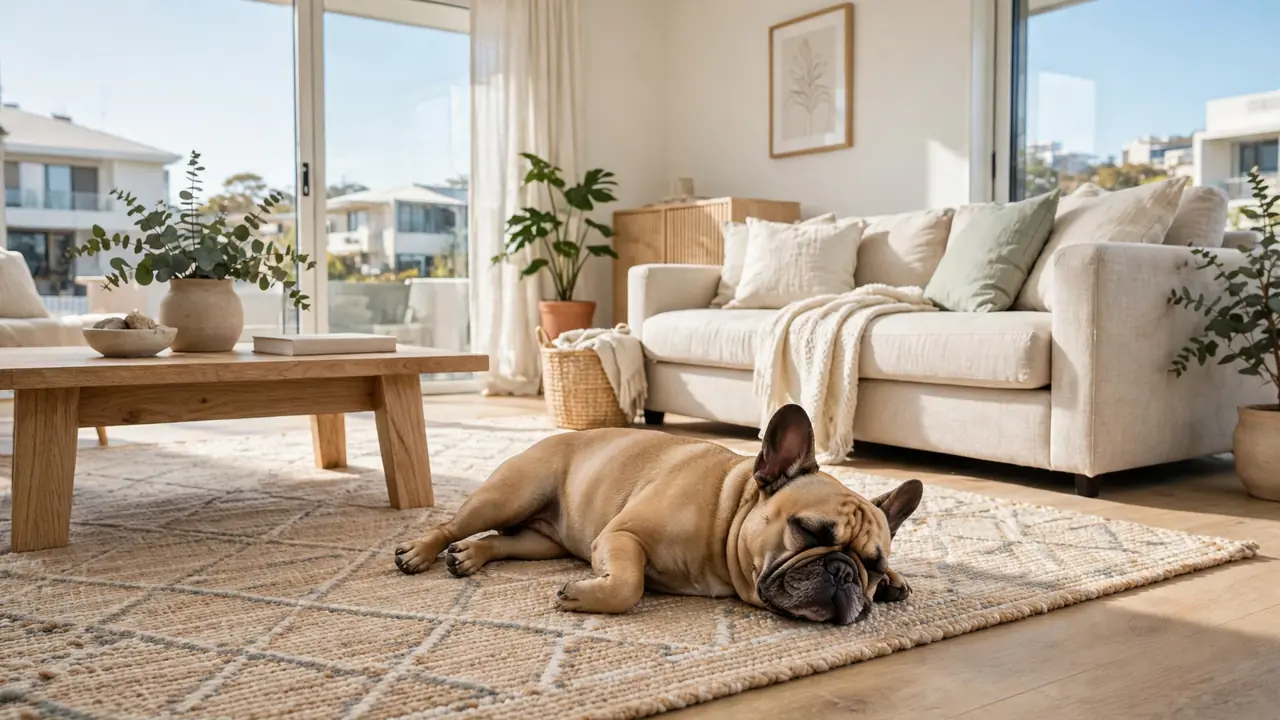
Nearly a third of Australians now live in apartments, units or townhouses — and plenty of them want a dog. The good news is that apartment living and dog ownership are completely compatible — this guide to the best dog breeds for apartments Australia has to offer shows exactly which breeds thrive in units, and why. The best dog breeds for apartments in Australia are not necessarily the smallest ones; what matters far more is energy level, barking tendency and how well a dog copes with being alone during your workday. A calm greyhound will be happier in a unit than a high-energy border collie with a backyard, because it is the dog’s needs, not the floor plan, that decide the fit.
What the Best Dog Breeds for Apartments Australia Have in Common
Forget size for a moment. The four traits that decide whether a dog thrives in an apartment are: low to moderate energy indoors (calm when inside, even if lively at the park), low barking tendency (your neighbours will thank you — and in many states, persistent barking can draw council noise complaints), moderate exercise needs that can be met with walks rather than a yard, and tolerance for alone time, since many apartment dwellers work full-time. Coat type matters too: heavy shedders in small spaces mean constant cleaning, and some body corporate by-laws in Australia still restrict dog size or breed, so check your strata rules before you fall in love with a specific dog. The best dog breeds for apartments Australia has to offer tend to share all four of these traits.
One more honest note: no breed is automatically quiet or calm. Individual temperament, training and daily routine matter enormously. A well-exercised, mentally stimulated dog of almost any breed copes better in a unit than a bored, under-walked “apartment breed”. The breeds below simply start with the odds in your favour.
Renting with a Dog in Australia: Know Your Rights
Before breed specifics, the practical reality for renters. Rules vary by state: in Victoria, renters have had the right to keep pets since 2020 rental reforms — landlords can only refuse with VCAT approval on reasonable grounds. In NSW, 2021 strata law changes mean blanket pet bans in strata schemes are generally unenforceable, though by-laws can impose reasonable conditions. Queensland, WA and SA have their own frameworks, generally more landlord-friendly. Wherever you are, get written permission before signing a lease, offer a pet resume (training certificates, references from previous landlords, desexing and vaccination records), and consider a slightly higher bond clean commitment. Being a model pet tenant — no barking complaints, no damage — protects not just your tenancy but the next renter with a dog.
What the Best Dog Breeds for Apartments Australia Cost to Keep
Budget before you commit. Beyond the purchase or adoption fee ($200–$800 for rescue, $1,500–$5,000+ for pedigree puppies), expect: food $50–$120/month depending on size and quality (see our dry dog food guide), pet insurance $40–$90/month (strongly recommended — one emergency surgery can cost $3,000–$8,000), annual vet care $300–$600, grooming $0–$1,200/year depending on breed (poodles and other non-shedding breeds need professional clipping every 6–8 weeks), plus council registration ($30–$90/year in most areas, cheaper for desexed dogs). Professional training — puppy preschool $150–$250 — is the highest-value money you will spend. All up, a small apartment dog typically costs $1,500–$2,500 a year to keep well.
Cavalier King Charles Spaniel
The Cavalier is arguably Australia’s quintessential apartment dog, and consistently ranks among the country’s most popular breeds. They are gentle, affectionate, quiet by nature and adaptable — happy with a decent walk and then content to curl up on the couch for hours. At 6–8kg they fit any lift, and their exercise needs are modest: 30–45 minutes a day keeps them happy. The trade-offs are real though: Cavaliers are prone to heart disease (mitral valve disease affects a large proportion of the breed), so buy only from a breeder who heart-tests breeding stock, and their silky coat needs brushing a few times a week. They also dislike being left alone for very long days — this is a companion breed that wants its people.
Greyhound
The greyhound is the great paradox of the dog world: a 30kg athlete that behaves like a professional couch potato. Retired racing greyhounds are famously lazy indoors, quiet, clean and low-maintenance, needing only a moderate daily walk and then long naps. Greyhound adoption groups operate in every state — Greyhound Rescue, GAP (Greyhounds As Pets) and state-based programs rehome thousands of ex-racers a year, usually for an adoption fee around $100–$300 through state programs like GAP (or up to about $425 with independent rescues) that includes desexing, vaccination and microchipping. They are short-coated (minimal grooming), rarely bark, and their gentle nature surprises everyone who expects a hyperactive racer. Considerations: they need a secure area for the occasional sprint, most cannot be trusted off-lead around small animals due to prey drive, and they feel the cold — a winter coat is standard kit in southern states.
French Bulldog
Frenchies are purpose-built for apartment life: compact, low-energy, minimal barking and endlessly entertaining. They need only short walks — in fact, their flat faces mean they overheat easily, so Australian summers require air-conditioning, shade and strictly limited midday exercise. The honest caveat is health and cost. French Bulldogs are among the breeds most affected by breathing difficulties (brachycephalic obstructive airway syndrome), skin allergies and spinal issues, and vet bills can be significant; pet insurance is strongly worth considering. Purchase prices from registered breeders typically run $2,500–$4,500, and health-tested breeders can charge more, so this is a breed where the lifetime cost deserves serious thought before the cuteness wins.
Pug
Similar story to the Frenchie but generally a notch cheaper and a touch more robust — though pugs share the flat-face breathing and overheating concerns, so the same summer caution applies. Pugs are comical, people-obsessed, low-energy indoors and famously unbothered by small spaces. They do shed more than people expect (short hair, but lots of it), snore loudly enough to be heard through walls, and are prone to obesity — strict portion control is essential. A pug that gets its 20–30 minute daily walk and a weight-watching diet is a delightful apartment companion for a decade or more.
Miniature or Toy Poodle
If allergies are a factor, poodles deserve top billing — and our full rundown of hypoallergenic dog breeds in Australia explains why low-shedding coats matter. Beyond the coat, poodles are brilliant apartment dogs: highly trainable (which means quiet-on-command is teachable), moderate energy that is easily satisfied, and minimal barking when properly exercised. The catch is grooming: that non-shedding coat mats without regular brushing and needs professional clipping every 6–8 weeks, at roughly $80–$120 a session in Australian cities. Factor that into the budget honestly. Poodles also need mental stimulation — puzzle toys and training games prevent the boredom barking that neighbours hate.
Shih Tzu
Bred literally as palace lap dogs, Shih Tzus are among the most apartment-adapted breeds on earth. They are small (4–7kg), quiet, low-energy and perfectly happy with short daily walks. Their long coat needs daily brushing or a practical short “puppy cut” every couple of months. Like other flat-faced breeds they can snore and need care in heat, but they are generally hardy and long-lived — 12–16 years is common. They can be a little stubborn in training, so start early and keep sessions fun and food-motivated.
Dachshund (Miniature)
Miniature dachshunds pack enormous personality into 5kg. They are adaptable to small spaces, need only moderate exercise, and are deeply loyal to their people. Two honest warnings: they can be vocal — alert barking at hallway noises is a breed trait, so training a “quiet” cue from puppyhood is essential in an apartment — and their long backs are vulnerable to intervertebral disc disease, which means no jumping on and off high furniture and keeping weight strictly controlled. Ramps instead of jumps are a standard dachshund-owner investment.
Whippet
Think of the whippet as the greyhound’s smaller, even more apartment-sized cousin (9–15kg). Same deal: sprint enthusiast outdoors, decorative throw rug indoors. Whippets are quiet, clean, low-odour and gentle, with minimal grooming needs. They are a touch more sensitive and Velcro-like than greyhounds — they want to be touching you — and like all sighthounds they need a secure space to run and can never be fully trusted off-lead. In a unit with a nearby off-lead park, a whippet is close to the ideal urban dog.
Strata By-Laws: The Fine Print That Matters
Beyond state law, your building’s strata by-laws are the document that actually governs your daily life with a dog. Even where blanket bans are unenforceable (as in NSW since 2021), by-laws can impose reasonable conditions: dogs on lead in common areas, not using certain lifts, restrictions on balcony toileting, noise rules, and requirements to clean up immediately. Some buildings cap dog numbers per unit or set weight limits. Before getting a dog: request the by-laws in writing from the strata manager, read the pet provisions fully, and get any approval in writing — verbal “yeah, dogs are fine” from a real estate agent is worthless if the by-laws say otherwise. If you already have a dog and face a complaint, respond in writing, document your training and management measures, and know that tribunals (NCAT in NSW, VCAT in Victoria, QCAT in Queensland) consistently side with responsible owners who can show they meet the by-laws. The owners who lose are the ones who ignored the rules, not the ones with dogs.
Making Apartment Life Work: The Owner’s Half of the Deal
Choosing from the best dog breeds for apartments Australia has is only half the equation. Apartment dogs need their exercise needs met with deliberate walks — morning and evening at minimum — because there is no backyard to self-exercise in. Mental enrichment matters even more in small spaces: food puzzles, snuffle mats, frozen Kongs and short training sessions prevent the boredom that becomes barking, chewing and complaints. Our guide to dog exercise needs by breed and age gives you the actual minutes per day for each life stage.
Sound management is a neighbourly duty. Train a “quiet” cue, do not leave dogs barking on balconies (many councils treat this as a noise nuisance with fines attached), and consider white noise if hallway sounds trigger alert barking. If you are bringing a second pet into the mix, read our guide on introducing a new dog to your cat — multi-pet apartments need a proper introduction plan. Finally, check your strata by-laws in writing before committing: some still ban dogs outright or impose weight limits, and discovering this after adoption helps nobody.
A final thought on choosing: visit the breed in real homes before committing — breed club meet-ups, friends’ dogs, or a weekend fostering through a rescue. An hour with an adult Cavalier or greyhound tells you more than ten articles. And whatever breed you choose, the first month’s routine (consistent walks, training, boundaries) shapes the dog’s apartment manners more than genetics ever will.
Frequently Asked Questions
Can large dogs live in apartments in Australia?
Yes — temperament matters more than size. Calm large breeds like greyhounds are often the best dog breeds for apartments Australia has to offer, ahead of small, high-energy, barky breeds. Check your strata by-laws for weight limits first, and be realistic about lift and stair access for a big dog.
What is the quietest dog breed for an apartment?
Greyhounds, whippets, Cavaliers and Shih Tzus are among the least barky breeds. But any dog can become a nuisance barker if under-exercised or anxious — training and routine matter as much as breed.
How much exercise does an apartment dog need?
Most apartment-suitable breeds need 30–60 minutes of walking daily plus mental enrichment. There is no substitute: without a backyard, those walks are non-negotiable, in all weather.
Are dogs allowed in apartments in Australia?
It depends on your state and strata. NSW strata law changed in 2021 so blanket pet bans are generally not enforceable, but by-laws can still impose reasonable conditions. Always check your specific building’s by-laws in writing before getting a dog.
Should I get a puppy or an adult dog for an apartment?
Adult rescue dogs (1–3 years) are often the smarter apartment choice: their temperament and energy level are known, they are usually toilet trained, and you skip the destructive chewing phase. Greyhound adoption groups especially suit first-time apartment owners.
Breed health notes reference the RSPCA Knowledgebase. Always check your strata by-laws before committing to a dog.