
If you love dogs but sneeze around them, hypoallergenic breeds can be life-changing — but the term needs honest unpacking first. No dog is 100% hypoallergenic: the allergens (proteins in dander, saliva and urine) exist in every dog. What “hypoallergenic” breeds offer is less allergen spread, because their low-shedding or non-shedding coats trap dander instead of broadcasting it around your home. For many allergy sufferers, that difference — combined with good grooming and house routines — is enough to share life comfortably with a dog. These are the best hypoallergenic dog breeds Australia has to offer, with straight talk on grooming costs, temperament and how to test your tolerance before committing.
What “Hypoallergenic” Really Means
Dog allergy is triggered mainly by the protein Can f 1, found in dander (dead skin flakes), saliva and urine — not by hair itself. Shedding dogs distribute dander widely as hair falls; low-shedding breeds keep more of it in the coat until grooming removes it. That is the entire mechanism: less loose hair and dander in the environment, fewer symptoms. Individual variation matters enormously — one poodle may bother you not at all while another triggers symptoms, because allergen production varies dog to dog. This is why spending time with the specific breed (and ideally the specific dog) before committing is essential, not optional. And management multiplies the benefit: weekly bathing of the dog, HEPA air purifiers, hard floors over carpet, keeping the dog out of the allergic person’s bedroom, and washing bedding frequently all reduce allergen load significantly.
Best Hypoallergenic Dog Breeds Australia — Our Shortlist
Every breed below is genuinely low-shedding, but they differ widely on grooming, exercise and temperament — pick the one that fits your life, not just your allergies.
Poodle (Toy, Miniature and Standard)
The poodle is the original hypoallergenic breed and still the benchmark — the curly, non-shedding coat is why so many “doodle” crosses exist. Beyond the coat, poodles are outstanding dogs: highly intelligent, trainable, athletic and long-lived (12–15 years across sizes). Toy and Miniature poodles suit apartments and smaller homes; Standards (20–30kg) are superb active family dogs. The honest cost is grooming: the coat mats without brushing every 2–3 days and needs professional clipping every 6–8 weeks, roughly $100–$140 for small poodles and $100–$150+ for Standards in Australian cities. That is $700–$1,200 a year in grooming — budget it before you fall in love. Poodles also need mental stimulation; a bored poodle is a mischievous poodle. See our apartment breeds guide for how the smaller poodles fit unit living.
Bichon Frise
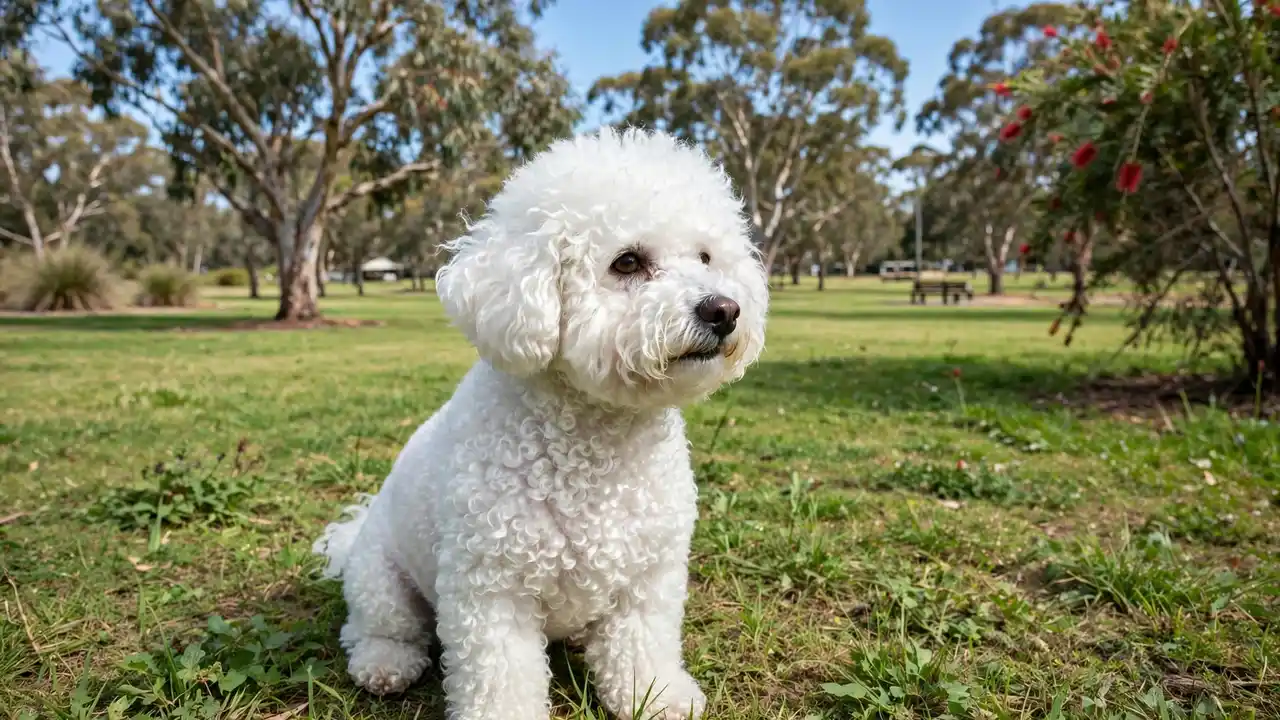
The Bichon’s soft, curly, non-shedding coat and cheerful temperament make it one of Australia’s most popular allergy-friendly companion breeds. Bichons are playful, gentle, good with children and other pets, and adaptable to apartments — 20–30 minutes of daily exercise plus play satisfies them. Grooming is the same deal as poodles: daily-ish brushing and clipping every 6–8 weeks ($110–$140). Watch for skin allergies (ironic but true — the breed is prone to them) and tear staining, which needs daily face wiping. Bichons dislike long alone hours; they are companion dogs that want their people home.
Portuguese Water Dog
Made famous as the Obama family dog (chosen for Malia Obama’s allergies), the Portuguese Water Dog is a medium-large (20–25kg), non-shedding, athletic breed with a wavy or curly waterproof coat. They are joyful, trainable, excellent swimmers and great active-family dogs — think of them as the allergy-friendly Labrador alternative. Exercise needs are solid (1–1.5 hours daily), and grooming runs $100–$140 every 6–8 weeks. They are less common in Australia than poodles, so finding an ethical breeder takes more effort and prices run higher ($3,000–$5,000+). A superb choice for an active allergic family willing to do the breeder homework.
Soft Coated Wheaten Terrier
The Wheaten’s silky, non-shedding coat and exuberant “wheaten greetin'” (an enthusiastic bouncing hello) make it a joyful family dog. Wheatens are medium-sized (15–20kg), good with kids, and moderately active — about an hour of daily exercise. The coat needs brushing every 2–3 days and clipping every 6–8 weeks. Two breed-specific notes: they can be stubborn in training (start early, keep it fun), and the breed is prone to protein-losing kidney and intestinal conditions, so buy only from breeders who screen for these. A delightful, slightly roguish choice for families who want personality with their low-shedding coat.
Schnauzer (Miniature, Standard and Giant)
Schnauzers come in three sizes sharing the same wiry, low-shedding coat and spirited temperament. The Miniature (6–9kg) is the most popular in Australia — alert, trainable, good in apartments with adequate exercise, and comically bearded. The wiry coat needs hand-stripping or clipping every 8–12 weeks plus regular brushing; many owners learn to maintain it at home. Miniatures can be vocal (train a quiet cue early), and all schnauzers need mental engagement — they are terriers at heart, clever and opinionated. Health-wise they are generally robust, though prone to pancreatitis, so keep diets lean and avoid fatty table scraps.
Maltese and Yorkshire Terrier
For those wanting a small, portable hypoallergenic companion, the Maltese (silky, non-shedding white coat, 3–4kg) and Yorkshire Terrier (fine, human-hair-like coat, 2–3kg) are classics. Both are affectionate, adaptable to apartments, and need only modest exercise. Grooming is significant relative to their size — daily brushing for full coats, or a practical short clip every 6–8 weeks. Both can be vocal and both need dental attention (small breeds are prone to dental disease — see our healthy treats guide for dental chew options). They are companion dogs through and through: wonderful for retirees and apartment dwellers, less suited to rough-and-tumble young kids simply due to fragility.
Doodle Crosses: The Honest Truth
Labradoodles, groodles, cavoodles and spoodles dominate Australian “hypoallergenic” searches — and they deserve honesty. A doodle is a crossbreed, and coat inheritance is a lottery: some puppies get the non-shedding poodle coat, some get the shedding coat of the other parent, and you often cannot tell until 6–12 months. Ethical doodle breeders who health-test both parents and breed for coat consistency exist but are the minority; the market is flooded with high-priced ($2,000–$6,000, typically $2,500–$4,000), poorly bred doodles with the health problems of both parent breeds and none of the predictability. If your allergies are significant, a purebred poodle from health-tested lines is the safer, more predictable choice — the coat you need is guaranteed, not hoped for.
Testing Your Allergies Before Committing
Do this before money changes hands: spend extended time with the breed — visit breeders, attend breed club meet-ups, dog-sit a friend’s dog for a weekend. Foster through a rescue if possible; many Australian rescues need foster carers and it is the ultimate trial. Note that puppy coats can differ from adult coats, and your reaction may change as the coat matures. Get your own allergies properly assessed too — sometimes the trigger is dust mites or pollen rather than the dog, and treating that changes the whole picture. A 10–15 year commitment deserves a month of testing. Whichever of the best hypoallergenic dog breeds Australia offers you shortlist, test with the adult dog, not just a puppy.
Myths About Hypoallergenic Dogs
Myth: “Hypoallergenic means no allergies.” Reality: it means reduced allergen spread, not zero allergens. Some severely allergic people still react. Myth: “It’s the hair that causes allergies.” Reality: the trigger is the Can f 1 protein in dander, saliva and urine — hair is just the vehicle. Hairless breeds still produce dander and can still trigger allergies. Myth: “Males/females or certain colours are less allergenic.” No reliable evidence supports sex- or colour-based allergen differences. Myth: “Puppies are fine, it’s adult dogs that trigger allergies.” Allergen production can increase as the coat matures — test with adult dogs of the breed, not just puppies. Myth: “Air purifiers alone solve it.” They help significantly as part of a system (grooming, hard floors, bedroom boundaries, washing bedding), but no single measure is enough for genuinely allergic owners.
The Allergy-Friendly Home Setup
Breed choice is half the equation; the home is the other half. Bedroom boundaries: keep the dog out of the allergic person’s bedroom — eight allergen-free hours nightly makes a measurable difference. Flooring: hard floors over carpet (carpet is an allergen reservoir); washable rugs where comfort matters. Air: a HEPA air purifier in the main living area ($150–$400) reduces airborne dander significantly. Bedding: wash the dog’s bedding weekly in hot water; wash your own bedding frequently too. Grooming: weekly baths reduce dander load (use a gentle dog shampoo — over-bathing dries skin and paradoxically increases dander), and brush outdoors or have a non-allergic family member do it. Hands and face: wash hands after handling, and resist face-licks. Combined, these measures often make the difference between “manageable” and “miserable” — owners who implement the full system report far better outcomes than breed choice alone delivers.
Best Hypoallergenic Dog Breeds Australia for Families with Kids
Allergies plus children narrows the field to breeds that are both low-shedding and genuinely kid-tolerant. Standard Poodle: the top pick — sturdy enough for active kids, highly trainable, endlessly playful, and the non-shedding coat is guaranteed (unlike doodle crosses). Portuguese Water Dog: exuberant, robust, and wonderful with active families who want a swimming, hiking companion. Soft Coated Wheaten Terrier: joyful and kid-friendly, though training needs patience. Bichon Frise: excellent for families with gentle, older children — sturdy enough for respectful play but too small for rough toddlers. Lagotto Romagnolo: the truffle-hunting Italian breed gaining popularity in Australia — medium-sized, non-shedding, affectionate and great with kids, though still uncommon (expect to search for ethical breeders). For families with very young children, prioritise temperament over coat: a calm, tolerant breed with manageable shedding often works out better in practice than a high-energy “hypoallergenic” breed that overwhelms toddlers. Always supervise dogs and small children together, whatever the breed — see our family breeds guide for the safety rules.
The pre-commitment allergy test: before paying a breeder or signing adoption papers, arrange extended exposure — visit the breeder’s home for an hour (allergen levels in a lived-in home are the real test, not a sterile meeting room), handle the specific dog, then monitor your symptoms for 24 hours. Even better, foster or dog-sit the breed for a weekend. Reactions vary enormously between individual dogs, so testing with the actual breed — ideally the actual dog — is the only reliable predictor. Bring antihistamines, note what triggers you (direct contact? the house air? bedding?), and be honest with yourself about the results: a dog you are allergic to is a 12–15 year daily compromise, not a minor inconvenience.
Budgeting the true cost: add grooming ($700–$1,200/year) to the purchase price before deciding. Work out the full first-year figure with our pet cost calculator. A $2,000 poodle puppy plus $1,000/year in grooming for 14 years adds up to $14,000 in grooming — $16,000 all up with the purchase price, seven times what you paid for the puppy. Owners who budget this honestly never resent it; owners who discover it later sometimes do. The coat is the price of the hypoallergenic benefit, and it is worth every cent when planned for.
Start your search for the best hypoallergenic dog breeds Australia offers with the breed clubs and the RSPCA — and always meet the dog before committing.
Frequently Asked Questions
Are there any 100% hypoallergenic dog breeds?
No. All dogs produce the Can f 1 allergen protein in dander, saliva and urine. Low-shedding breeds spread less of it around your home, which is enough for many allergy sufferers — but guarantees do not exist.
Which hypoallergenic breed is best for apartments?
Miniature or Toy Poodle, Bichon Frise, Maltese and Miniature Schnauzer all suit apartment living with moderate exercise. All need professional grooming every 6–8 weeks.
How much does grooming a hypoallergenic dog cost in Australia?
Typically $85–$160 every 6–8 weeks depending on size and coat condition — roughly $700–$1,200 per year. This is the hidden ongoing cost of low-shedding breeds and must be in the budget.
Are Labradoodles truly hypoallergenic?
Not reliably. Coat inheritance in crossbreeds is unpredictable — some doodles shed significantly. For guaranteed low-shedding, a purebred poodle from health-tested lines is the safer choice.
Can I build tolerance to dog allergies?
Some people find symptoms lessen with gradual exposure, but this is unpredictable and not medically assured. Do not acquire a dog counting on tolerance developing — choose a genuinely low-shedding breed and manage the environment.
Allergy information is general only — consult your GP or allergist about managing pet allergies. Breed guidance consistent with RSPCA advice on choosing a suitable dog.