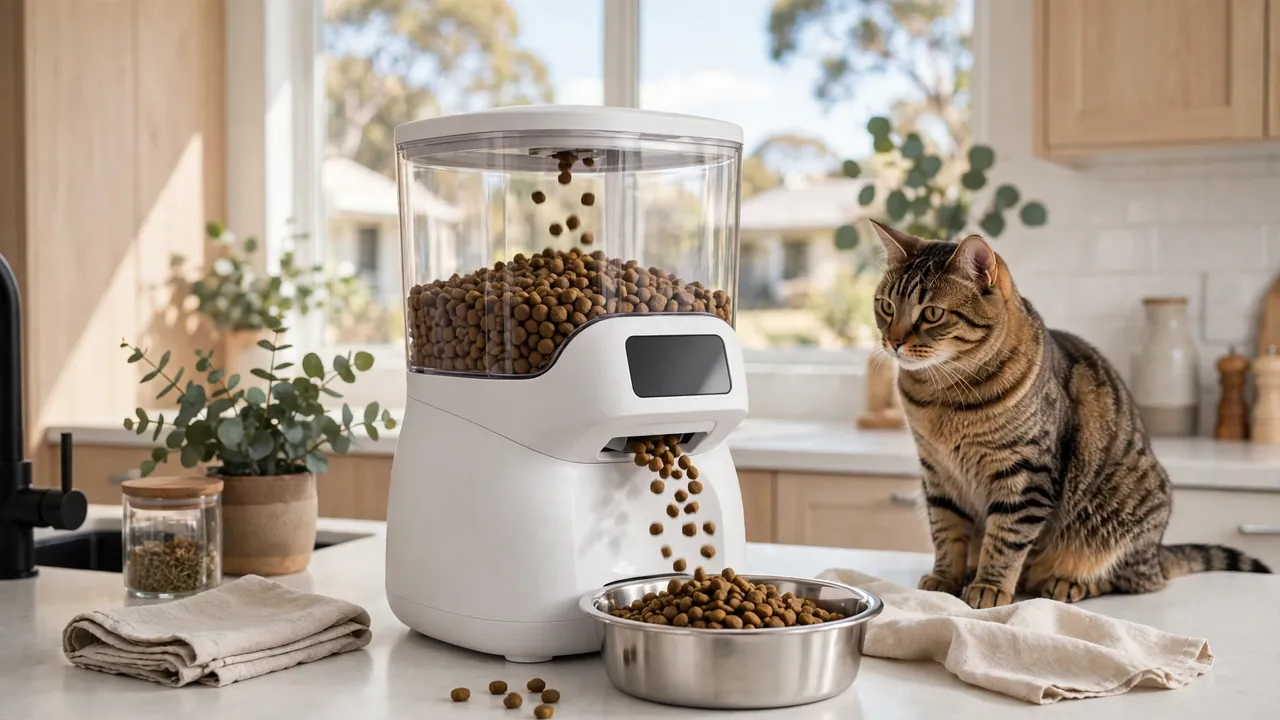
An automatic cat feeder won’t replace you — but it will end the 5am face-pawing, keep meals on schedule when you’re stuck at work, and make short absences far less stressful. The best automatic cat feeders Australia 2026 has to offer split into two camps: simple timed feeders (reliable, affordable, no app) and smart Wi-Fi feeders (portion control from your phone, feeding alerts). Choosing wrong means jammed kibble, a clever cat defeating the lid, or wet food spoiling — so here’s what actually matters, the top picks with real Australian prices, and the mistakes to avoid.
Prices checked 28 October 2026 at Australian retailers — check current listings before buying.
Do You Actually Need One?
Automatic feeders suit: shift workers with unpredictable hours; multi-cat homes where one cat steals food (paired with microchip feeders); weight-management plans needing precise portions; weekend absences; and anyone whose cat has trained them into a 5am breakfast service. They don’t suit: cats on prescription diets requiring strict monitoring, cats that need medication with meals, or households where the feeder would replace human interaction entirely. And no feeder handles wet food brilliantly — more on that below.
Timed vs Smart Feeders: Which Type?
- Timed/rotating-tray feeders: a circular tray with portioned compartments rotates on schedule. Simple, battery-powered, no Wi-Fi to fail. Best for: basic schedule-keeping, short trips. Limitation: limited portions per fill, and clever cats sometimes learn to spin the tray.
- Gravity/hopper feeders: kibble flows into the bowl as it’s eaten. Cheap and simple — but they don’t portion-control at all, so they’re obesity machines for most cats. Only suitable for genuine grazers that self-regulate (rare).
- Smart Wi-Fi feeders: app-controlled scheduling, precise portions (down to 1/8 cup), feed-now buttons, low-food alerts, sometimes cameras. Best for: portion control, monitoring, peace of mind. Limitation: price, reliance on Wi-Fi and power (check battery backup), and app quality varies.
- Microchip feeders: open only for the registered cat’s microchip — the solution for food thieves and prescription-diet households. (SureFeed is the well-known brand, widely stocked in Australia.)
Best Automatic Cat Feeders Australia 2026: Top Picks
Best smart feeder: PetSafe Smart Feed — US RRP $299.99
The established premium choice in Australia. Holds 24 cups of dry food, schedules up to 12 meals daily in portions from 1/8 to 4 cups, slow-feed mode for gobblers, low-food alerts to your phone, and it keeps feeding on schedule if Wi-Fi drops. PetSafe’s Australian distribution means local support and AU power compliance. Street price at Australian specialty retailers runs around $330–$365 (barkcontrol.com.au lists it at $334.49). It’s the “buy once, cry once” option for owners who want full control.
Best mid-range smart feeder: PETLIBRO / generic Wi-Fi feeders — $120–$200
Among the best automatic cat feeders Australia 2026 offers in the mid-range, the $120–$200 Wi-Fi tier (PETLIBRO and similar brands stocked via Amazon AU, Kogan and eBay sellers) gives you app scheduling, portion control and desiccant freshness systems at half the PetSafe price. Reviews are generally positive for the core job — dispensing on time — with the usual caveats: check the seller’s Australian warranty support, confirm AU plug/power, and read recent reviews for jam complaints with your kibble size.
Best budget timed feeder: rotating-tray feeders — under $100
Simple rotating 5–6 meal tray feeders (PetSafe’s 6-meal tray design and equivalents) are the budget workhorses: battery-powered, no app, each compartment holds about a cup. Perfect for weekend coverage and 5am breakfast duty. Look for tamper-resistant lids — determined cats defeat flimsy ones. Expect to pay well under $100 at Petbarn, Pet Circle or Kogan.
Best for multi-cat food thieves: SureFeed Microchip Feeder
If one cat inhales everyone’s dinner, schedule-based feeders don’t help — you need access control. Microchip feeders read the cat’s implanted chip (or collar tag) and open only for the authorised cat, sealing shut otherwise. Invaluable for prescription diets and weight management in multi-cat homes. Higher cost per cat (one unit each), but it solves a problem nothing else does. The standard feeder retails around $229 in Australia (AU RRP; street prices roughly $200–$250) — and the app-connected version costs more, with its hub sold separately.
Best for wet food: refrigerated/timed wet-food feeders
The honest truth: no dry-food hopper feeder handles wet food — it spoils. Options are limited: rotating-tray feeders with ice packs underneath buy a few hours (fine for a workday, not a weekend), and a couple of premium brands offer cooled compartments. For wet-food cats, the practical setup is a timed tray feeder for the daytime wet meal plus a human for evenings — or accept that wet food and multi-day automation don’t mix, and arrange a sitter instead.
Key Features to Compare
- Portion precision: can it dispense small, consistent meals? Critical for weight management — vague “small/medium/large” settings aren’t enough.
- Power backup: does it keep schedule during a blackout? Battery backup (or battery-primary) is essential — a feeder that misses meals when the power flickers is a liability.
- Kibble compatibility: check max kibble size. Large or oddly shaped kibble jams mechanisms — a top complaint in reviews. Match feeder to your cat food.
- Capacity vs freshness: a huge hopper is convenient but kibble goes stale; desiccant packs help. Don’t fill more than ~2 weeks of food.
- Cleaning: food-contact parts should be removable and dishwasher-safe. Stale fat residue in a hopper is a hygiene issue.
- Tamper resistance: read reviews specifically for “my cat broke into it” — cats are shockingly good at defeating lids, buttons and trays.
- App quality (smart models): check recent app-store reviews, not just the product page. A feeder with a broken app is an expensive timed feeder.
Setup Mistakes to Avoid
- Switching cold turkey: run the feeder alongside normal feeding for a week so the cat trusts it. A cat that doesn’t recognise the feeder as food may simply not eat.
- Wrong portions: measure what you were hand-feeding first, then program to match. An “average” setting on a feeder and your cat’s actual needs may differ by 50%.
- No backup plan: for any absence, have a human check-in at least daily. Feeders jam, tip over, or get unplugged by curious cats. Technology plus a neighbour beats technology alone.
- Feeding only dry: a feeder doesn’t change the hydration equation — keep wet food in the diet and fresh water available.
- Ignoring the data: smart feeders that log uneaten meals are telling you something — appetite changes are early illness signals. Notice them.
Best Automatic Cat Feeders Australia 2026 Compared: Key Specs at a Glance
- PetSafe Smart Feed (Wi-Fi): 24-cup hopper, up to 12 meals/day, 1/8–4 cup portions, app control + alerts, slow-feed mode, battery backup option. US RRP $299.99; AU retail ~$330–$365. Best for: full control and monitoring.
- Mid-range Wi-Fi feeders ($120–$200): app scheduling, portion control, desiccant freshness, typically 4–6L hoppers. Best for: smart features on a budget. Check AU warranty and plug compliance.
- Rotating-tray timed feeders (under $100): 5–6 compartments, battery-powered, no app. Best for: simple schedule-keeping, weekends away, 5am breakfast duty.
- SureFeed Microchip Feeder: opens only for the registered cat’s microchip. Around $229 (AU RRP). Best for: multi-cat food thieves, prescription diets. One unit per cat.
- Gravity feeders ($20–$40): no portion control. Best for: almost nothing — only genuine self-regulating grazers, which are rare. Generally not recommended.
Smart Feeder Privacy and Reliability
Wi-Fi feeders are IoT devices — treat them like one. Choose brands with a track record of app updates (check recent app-store reviews, not just the product page), use a strong unique password, and keep the feeder on your main home network rather than a guest network it might lose. Reliability checklist before trusting a smart feeder with your cat’s meals: run it for two weeks while you’re home, verify portions with a measuring cup (dispense into a bowl and check), confirm it feeds during a Wi-Fi outage (unplug your router for an hour at mealtime as a test), and confirm battery backup actually works (unplug the feeder). A feeder that fails any of these tests isn’t ready for your holiday.
Troubleshooting Common Feeder Problems
- Kibble jams: usually oversized or oddly shaped kibble. Switch to a smaller, rounder kibble or a feeder rated for larger pieces. Never force the mechanism.
- Cat defeats the lid: upgrade to a locking-lid model; place the feeder where the cat can’t get leverage (against a wall, on a non-slip mat). Some owners add a heavy book on top — inelegant but effective.
- Meals missed: check power, Wi-Fi, hopper level, and whether the cat unplugged it (it happens). Smart feeder logs show what actually dispensed — review them.
- Cat won’t eat from it: run the feeder alongside normal bowls for 1–2 weeks; put high-value treats in the feeder bowl; ensure the dispensing noise isn’t frightening (some cats need desensitisation to the motor sound — trigger it manually with treats nearby).
- Stale food: don’t fill more than ~2 weeks of kibble; use desiccant packs; clean the hopper monthly (stale fat residue goes rancid).
- Multiple cats, one greedy: a scheduled feeder won’t fix food theft — that’s a microchip feeder problem (one per cat) or separate-room feeding.
Feeder Hygiene: The Maintenance Schedule
A feeder is a food-storage device — treat it like one:
- Weekly: wash the bowl (and any tray) in hot soapy water; wipe the dispensing chute; check for kibble dust buildup.
- Monthly: empty and wash the hopper fully; check desiccant packs (replace when saturated); inspect seals and lids for wear.
- Quarterly: deep clean all removable parts; check battery contacts for corrosion; update the app/firmware; verify portion accuracy with a measuring cup (mechanisms drift).
- Ongoing: never mix old and new kibble batches without cleaning (stale fat coats fresh kibble); store bulk kibble sealed and cool, not in the feeder hopper for months.
Rancid fat in an uncleaned hopper causes subtle food refusal that owners blame on the cat being “fussy” — when it’s the feeder that’s off. If your cat suddenly rejects feeder food but eats from a bowl, clean the feeder before assuming anything else.
When feeders aren’t enough: the human backup rule
No feeder, however good, replaces a human check-in for absences beyond 24 hours. Cats can jam mechanisms, tip feeders, unplug cables, or simply stop eating from stress — and a feeder can’t notice. The responsible setup for any absence: a reliable feeder plus a daily human visit (neighbour, friend, or professional sitter). For weekends, the feeder covers meals while the human covers welfare. For longer trips, the human becomes primary and the feeder becomes backup. Technology extends your reach; it doesn’t replace your responsibility. A simple rule: if you’d want someone checking on you in that situation, your cat deserves the same. Build your holiday plan around this principle and you’ll never have to feel guilty leaving — or anxious while you’re away. The best feeder setup is the one you trust enough to stop worrying about. Test it for two full weeks before any trip — confidence in the system is what lets you actually enjoy the holiday. A feeder you trust is worth its weight in peace of mind.
FAQs: Best Automatic Cat Feeders Australia 2026
Are automatic cat feeders worth it?
For shift workers, portion control, weight management and short absences — yes. They keep schedules consistent and end early-morning wake-ups. They don’t replace human check-ins for longer absences.
How much do automatic cat feeders cost in Australia?
Budget timed tray feeders under $100; mid-range Wi-Fi feeders $120–$200; premium smart feeders like the PetSafe Smart Feed around $300–$365 (US RRP $299.99). See our pet cost calculator for the full first-year picture.
Can automatic feeders dispense wet food?
Standard hopper feeders can’t — wet food spoils. Rotating-tray feeders with ice packs manage a workday’s wet meal; for longer, arrange a sitter.
Do automatic feeders work during power outages?
Only models with battery backup (or battery-primary designs). Check this spec before buying — a feeder that stops in a blackout is a liability.
Will my cat break into the feeder?
Determined cats defeat flimsy lids, so read reviews for tamper-resistance specifically, and choose feeders with locking lids and sturdy construction.
What’s the best feeder for multiple cats?
For portion control per cat, smart feeders with precise settings; for food thieves or prescription diets, microchip feeders (one per cat) that open only for the authorised animal.
Prices checked 28 October 2026. Product reference: PetSafe Smart Feed at Bark Control Australia.