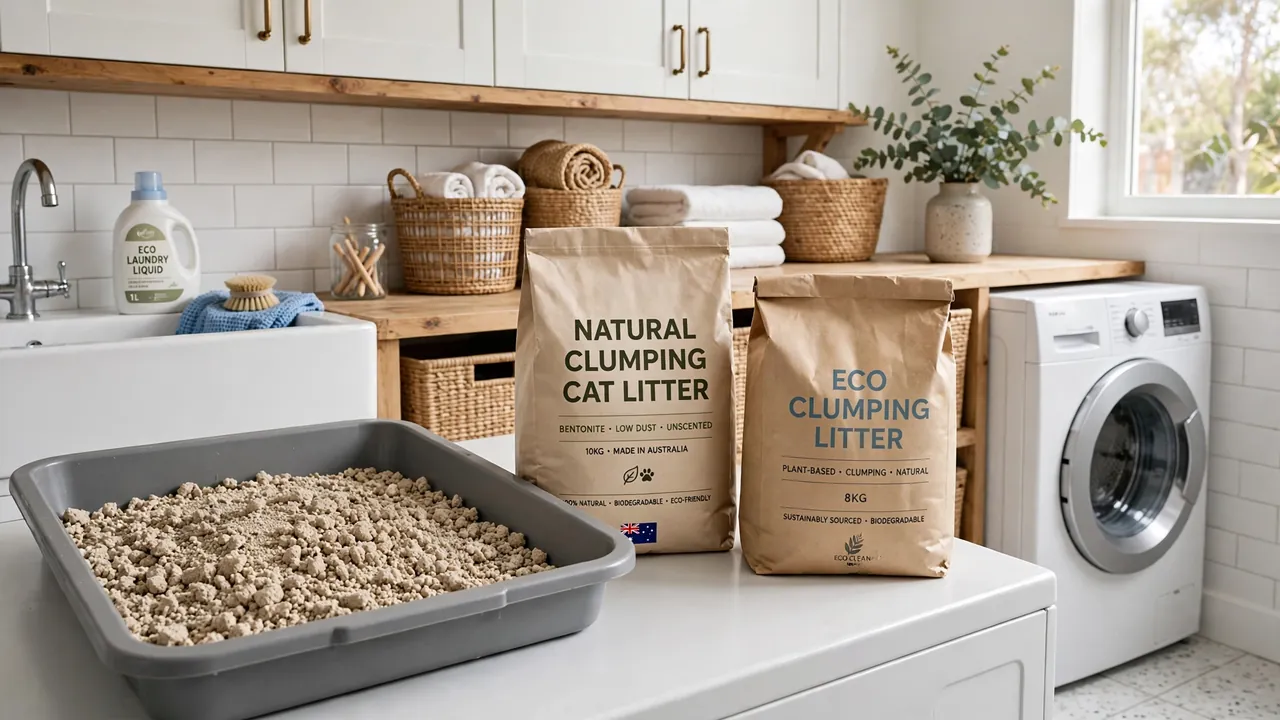
Cat litter is the least glamorous purchase in pet ownership and one of the most consequential — the wrong litter means odour, tracking through the house, dust on every surface, and in the worst case, a cat that refuses the tray entirely. The Australian market in 2026 spans traditional clumping clay, silica crystal, tofu, wood pellets, corn and recycled paper, each with genuine trade-offs. There is no single “best” — only the best match for your cat, your home and your tolerance for scooping. This best cat litter Australia 2026 guide compares the top types and standout products with real October 2026 prices, so you can choose on evidence instead of packaging.
Best Cat Litter Australia 2026: The Main Types Compared
Clumping clay (bentonite): The traditional default. Forms hard scoopable clumps, good odour control, most cats accept it readily, widely available and affordable — roughly $4.50–$15/month for one cat. Downsides: dusty (a concern for asthmatic cats and owners), heavy bags, tracks moderately, and it is strip-mined clay — the least eco-friendly option. Silica crystal: Super-absorbent beads with excellent sustained odour control, very low dust, low tracking, and long tray life (3–4 weeks per fill versus 2–3 for clumping). Costs more — roughly $7.50–$32/month. Some cats dislike the texture underfoot, and it does not clump (solids are scooped, urine is absorbed). Tofu/soy: The rising star in Australia — made from soybean fibre, clumps well, flushable in small amounts (check local plumbing advice), low dust, light to carry, and most cats accept it. Typically $15–$25 per bag. Wood pellets/pine: Cheap ($20–$28 for 15kg), natural pine odour control, low dust — but pellets break down into sawdust when wet and do not clump, so trays need regular full changes; best with sifting trays. Corn/wheat: Natural clumping, flushable, good odour control (World’s Best Cat Litter is the category leader at around $50–$70 depending on bag size), but premium-priced and must be stored dry. Recycled paper pellets: Excellent for post-surgery cats (non-clumping, non-irritating) but poor odour control for daily use. Monthly figures above are rough estimates for one cat — actual cost depends on tray size and how often you change the litter.
Best Clumping Litter: Trouble & Trix / Catsan
For classic clumping performance, two names dominate Australian shelves. Trouble & Trix clumping varieties (baking soda and lavender, 15L) list around $27.50 at Australian retailers — reliable hard clumps, decent odour control, and the baking-soda variant suits odour-sensitive households. Catsan Ultra Clumping (7kg, made with Australian bentonite) is the vet-clinic favourite — hard clumps, natural scent without heavy perfumes that put cats off, and low dust for a clay litter. For most first-time buyers in this best cat litter Australia 2026 guide, clumping remains the safest choice if you are unsure what your cat prefers — acceptance rates are highest, and daily scooping keeps odour fully controlled. Pair with a litter mat ($15–$30) to catch tracking, which is clumping litter’s main household annoyance.
Best Crystal Litter: Trouble & Trix AntiBac Crystal
Trouble & Trix AntiBac Crystal (around $25–$32 depending on scent and size) is the standout crystal option on Australian shelves — antibacterial claims, strong sustained odour absorption, and genuinely low dust. Crystal suits: apartment dwellers (odour control in small spaces is superb), allergy or asthma households (minimal airborne dust), and owners who prefer less frequent full tray changes. The honest trade-offs: higher monthly cost, some cats reject the bead texture (test with a small bag first — a full refusal means a cat toileting elsewhere, which is a far bigger problem than litter preference), and crystals can be heard crunching underfoot when tracked. For multi-cat homes, budget for more frequent changes than the packet suggests — odour capacity is finite.
Best Natural/Eco: Tofu and Wood Options
Tofu litter (Trouble & Trix tofu varieties around $23.90; PETSHY tofu from ~$14.39/2.5kg) is arguably the best all-rounder for eco-conscious owners — clumps like clay, weighs far less, low dust, and breaks down far faster than clay in landfill. World’s Best Cat Litter (corn-based, ~$50–$70 depending on bag size) is the premium natural pick — outstanding clumping and odour control, genuinely low dust, and the multi-cat formula handles high tray traffic well. Wood pellets (CATMATE 15kg ~$27.95; Elite pine 15kg ~$21.99) are the budget eco choice — cheapest per kilo by far, natural pine scent, but the non-clumping sawdust breakdown needs a sifting tray system to work well. One caution: “flushable” claims on tofu and corn litters should be treated carefully in Australia — most plumbers advise against flushing any litter regularly, and septic systems are a definite no.
Choosing the Best Cat Litter Australia 2026 for Your Situation
Small apartment: crystal or tofu — odour control and low dust matter most in confined space. Multi-cat household: fast-clumping clay or corn (World’s Best Multi-Cat), plus the golden rule of tray numbers: one per cat plus one spare, spread across the home. Asthma/allergies (cat or human): low-dust crystal, tofu or paper — avoid dusty clays. Post-surgery or kittens under 8 weeks: non-clumping paper pellets — clumping litter can be dangerous if ingested by very young kittens. Budget: wood pellets or budget clumping clay. Senior or arthritic cats: whatever they already accept, in a low-sided tray — never change a senior cat’s litter type and tray simultaneously. Whatever you choose, transition gradually over 7–10 days by mixing increasing proportions — abrupt litter changes are a top cause of tray refusal. And feeding affects the tray too: diet changes stool odour significantly (see our cat food guide).
Tray Hygiene: The Part That Matters Most
The best litter in a neglected tray still fails. Scoop solids and clumps daily (twice daily for multi-cat homes), top up litter to maintain 7–10cm depth, and do full tray washes with mild detergent every 2–4 weeks (weekly for non-clumping types). Litter tray avoidance is one of the most common cat behaviour complaints, and the causes are almost always husbandry: dirty trays, too few trays, covered trays that trap odour (many cats hate hooded trays), tray location next to noisy appliances, or sudden litter changes. A cat that stops using the tray needs a vet check first — urinary issues are medical until proven otherwise — then a husbandry audit. Clean trays, right litter, enough trays: unglamorous, and 90% of the battle.
Litter Box Setup: Getting the Basics Right
Litter choice is only half the equation — setup is the other half, and most tray problems are setup problems. Number: one tray per cat plus one spare, spread across the home (not lined up in a row — that counts as one location to a cat). Size: the tray should be at least 1.5 times the cat’s body length; most commercial trays are too small for large cats — storage tubs with a cut-down side make excellent large trays for a few dollars. Location: quiet, accessible, away from food and water, not next to noisy appliances — and escape routes matter: a tray wedged in a corner where another pet can ambush creates avoidance. Covered vs open: most cats prefer open trays (better airflow, multiple escape routes); covered trays trap odour and suit owners more than cats. Depth: 7–10cm of litter for diggers. Get the setup right — whatever best cat litter Australia 2026 option you choose — and most “litter problems” never start — which is why our behaviour guides always start with husbandry before assuming a behaviour problem.
Litter for Kittens: Special Rules
Kittens under 8 weeks should use non-clumping litter only — young kittens taste everything, and ingested clumping litter can cause dangerous intestinal blockages. Recycled paper pellets are the standard kitten-safe choice. From 8–12 weeks, transition gradually to the household litter by mixing increasing proportions over 7–10 days. Use a low-sided tray kittens can climb into easily, place it close to where the kitten plays and sleeps (kittens have tiny bladders and poor planning), and expect accidents — they are developmental, not defiance. One caution for new kitten owners: scented litters can overwhelm tiny noses and cause avoidance; start unscented and stay unscented unless the cat shows a clear preference otherwise.
Controlling Litter Odour: The Complete System
Odour control is a system, not a product. Scoop daily — nothing controls odour like removing the source; twice daily for multi-cat homes. Maintain depth — thin litter layers saturate fast; 7–10cm absorbs properly. Full changes on schedule — even scoopable litters saturate: every 2–3 weeks for clumping, 3–4 for crystal, weekly for non-clumping. Wash the tray with mild detergent at each full change — plastic absorbs odour over time, and very old trays should be replaced yearly. Location ventilation matters more than air fresheners (many of which are toxic to cats — avoid plug-ins near trays). Diet affects stool odour significantly — low-quality foods produce notably worse litter boxes (see our cat food guide). And the nuclear option for persistent odour: an enclosed litter cabinet with ventilation or a self-cleaning litter box ($200–$700 for mid-range models; premium automatic boxes can exceed $1,000) — expensive, but a genuine upgrade for small apartments.
Eco-Friendly Litter Disposal in Australia
With millions of cats in Australia, litter waste adds up. The greenest practical approach: choose a biodegradable litter (tofu, wood, corn, paper), bag waste in compostable bags, and bin it — do not flush, and do not put cat waste in home compost used for food gardens (toxoplasmosis risk). Some councils accept pet waste in green organics bins; most do not — check your council’s rules, as putting it in the wrong bin contaminates the stream. Wood pellet users with sifting trays generate the least waste (only soiled sawdust is discarded). Crystal and clay litters are the least eco-friendly — if environmental impact matters to you, that alone is a reason to trial tofu or wood. Small choices, multiplied across years of litter changes, add up to a genuinely meaningful difference.
Self-Cleaning Litter Boxes: Are They Worth It?
Automatic litter boxes ($200–$700 for mid-range models, with premium models over $1,000) divide cat owners sharply. The case for: always-clean trays (the number-one factor in tray compliance), less daily scooping, odour containment, and useful for owners with mobility issues. The case against: high upfront cost plus ongoing proprietary litter/tray expenses; noise that startles some cats into avoidance (a cat that fears the box is worse than a dirty manual tray); mechanical rakes can jam with certain litter types; and they suit single-cat homes far better than multi-cat ones. The verdict: worth considering for one or two cats in apartments where odour and convenience matter most — but introduce gradually alongside the old tray, use the manufacturer’s recommended litter type, and keep a manual tray available during the transition. If your cat refuses the automatic box within two weeks, accept it and return to manual — no gadget is worth a cat toileting elsewhere. For most households, the money is better spent on an extra large tray, premium litter and a strict scooping routine.
The unscented default: when in doubt, choose unscented litter — heavy perfumes are formulated for human noses, not cat ones, and strong fragrances are a common cause of tray avoidance. You can always add odour control through husbandry (daily scooping, adequate depth, regular full changes) rather than perfume. If you love a scented litter and your cat uses it happily, that is fine — but if tray problems appear, the scent is the first variable to eliminate.
Frequently Asked Questions
What is the best cat litter in Australia?
There is no single winner — clumping clay suits most cats and budgets, crystal excels for odour and low dust in apartments, and tofu is the best eco all-rounder. That is the honest verdict of this best cat litter Australia 2026 comparison: match the type to your home and your cat’s preference.
How much does cat litter cost per month in Australia?
Roughly $4.50–$15/month for clumping clay, $7.50–$32 for crystal, and $15–$30 for premium natural litters — for one cat, varying with tray size and change frequency. Litter is one line in a cat’s yearly costs — see our pet cost calculator for the full first-year picture.
Is crystal or clumping litter better?
Crystal wins on odour longevity, dust and tracking; clumping wins on cost, cat acceptance and scoop-and-go convenience. Cats with texture sensitivities often prefer clumping.
Can you flush cat litter in Australia?
Generally not recommended — most plumbers advise against flushing any litter, and it is unsafe for septic systems. Bag and bin it, even “flushable” varieties.
Why is my cat not using the litter tray?
See a vet first to rule out urinary issues, then audit husbandry: tray cleanliness, number of trays (one per cat plus one), litter type changes, tray location and covered versus open trays.
Prices checked 25 October 2026 from Australian retailers and may vary. Litter guidance consistent with RSPCA cat care advice.