
This article is general information only and not veterinary advice. Vaccination protocols vary by region, lifestyle and individual risk — always follow your vet’s tailored schedule. If your puppy is unwell or it’s an emergency, see your vet promptly.
Getting the puppy vaccination schedule Australia right is the highest-value health decision you’ll make in your dog’s first year. Parvovirus — one of the core diseases vaccines prevent — kills unvaccinated puppies every week in Australia, causes horrific suffering, and costs thousands to treat with no guarantee of survival. The vaccine course costs a few hundred dollars total. It’s not a close call. This guide explains the Australian C3/C5/C7 system, the timing, what each visit involves, costs, side effects, and the questions worth asking your vet.
What Do the C3, C5 and C7 Vaccines Cover?
Australian vets use a shorthand that confuses every new owner exactly once:
- C3 (core): canine distemper virus, canine parvovirus, canine adenovirus (infectious hepatitis). The essential trio — every dog needs these.
- C5: C3 plus Bordetella bronchiseptica and parainfluenza virus — the two main causes of canine cough (kennel cough). Required by most boarding kennels, daycares and training clubs.
- C7: C5 plus leptospirosis (and sometimes coronavirus). Recommended for dogs with lifestyle exposure — swimming in dams, rural properties, rats in the area.
Your vet will recommend which level suits your puppy based on where you live and what the dog will do. A city apartment puppy that never boards might do fine on C3; a social puppy headed for daycare needs C5; a farm dog swimming in creeks should discuss C7.
The Standard Puppy Vaccination Schedule Australia
While your vet tailors the plan, the standard Australian protocol endorsed by the Australian Veterinary Association framework looks like this:
- 6–8 weeks: C3 — first vaccination, usually given by the breeder or rescue before the puppy comes home. Ask for the vaccination record.
- 10–12 weeks: C5 — second vaccination, adding kennel cough components.
- 14–16 weeks: C3 or C5/C7 — final puppy vaccination. This timing matters: maternal antibodies (protection passed from mum) can block the vaccine’s effect in younger puppies, which is why the final dose must be at 14–16 weeks, not earlier.
- 12 months: booster — first annual booster, typically C5.
- Adulthood: C3 core components every 1–3 years (many modern vaccines are registered for triennial use); kennel cough components annually if lifestyle warrants it.
The critical rule: puppies aren’t fully protected until about two weeks after the final 14–16 week vaccination. Before that, they’re vulnerable — which shapes everything about socialisation and outings (see below).
What Happens at Each Vet Visit
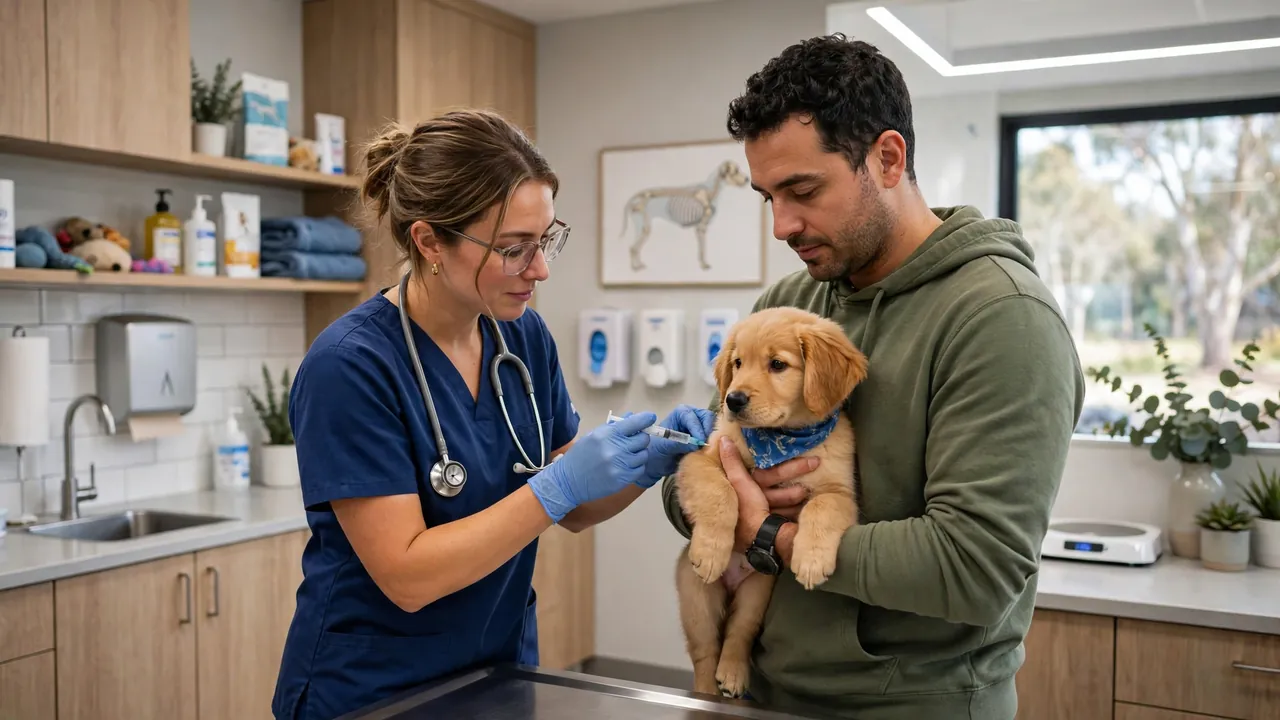
Vaccination visits are about much more than the needle. A proper puppy vaccine appointment includes a full health check: weight, temperature, heart and lungs, eyes, ears, mouth and teeth, skin and coat, and a feel for hernias or abnormalities. The vet will discuss diet, parasite prevention, toilet training, early socialisation, desexing timing, microchipping and genuinely suitable pet insurance options. The injection itself is a small subcutaneous jab between the shoulder blades — most puppies barely notice, especially with a treat distraction. You’ll get a vaccination record card or booklet — keep it safe; boarding facilities, councils and puppy schools all ask for it.
How Much Do Puppy Vaccinations Cost in Australia?
Prices vary by clinic and city, but 2026 Australian data gives a clear picture. As approximate November 2026 snapshots:
- Per-visit cost: roughly $85–$170 depending on vaccine type (C3 at the lower end, C5/C7 higher) and whether the consult fee is bundled.
- Full puppy course (3 visits): typically $250–$400 total. Some clinics quote $170–$250 per visit in Sydney/metro areas.
- Annual boosters: around $85–$140 for C3, $120–$170 for C5.
Ask what’s included — reputable clinics bundle the full health check into the vaccine price. Beware rock-bottom “vaccination only” deals that skip the examination; the check-up is half the value. And note: vaccinations aren’t covered by standard pet insurance unless you’ve added a routine-care option — budget for them separately. For the bigger financial picture, see our pet insurance comparison.
Socialisation vs Protection: The Delicate Balance
Here’s the dilemma every puppy owner faces: the prime socialisation window (roughly 3–14 weeks) overlaps exactly with the period of incomplete vaccination. Keeping a puppy isolated until 16 weeks produces an under-socialised, fearful adolescent — a far bigger long-term problem than most owners realise. The veterinary consensus solution:
- Do: carry your puppy in public, invite healthy vaccinated dogs to your home, attend reputable puppy preschools (which require first vaccinations and manage hygiene), expose the puppy to sounds, surfaces, people and traffic from your arms or a clean blanket.
- Don’t: put an unvaccinated puppy on the ground at dog parks, beaches, or footpaths where unvaccinated dogs toilet — parvovirus survives in soil for months.
- Ask your vet about local parvovirus risk — it varies enormously by area, and your vet’s advice should reflect local disease pressure.
Side Effects: What’s Normal and What’s Not
Most puppies show no reaction at all, or mild effects settling within 24–48 hours:
- Normal: slight sleepiness, mild tenderness at the injection site, slightly reduced appetite for a day. A small, soft lump at the injection site can persist for a couple of weeks.
- Call your vet promptly: facial swelling, hives, repeated vomiting, or marked lethargy.
- Emergency: difficulty breathing, collapse, or pale gums — anaphylaxis is rare but real. This is why vets often ask you to wait 10–15 minutes after vaccination.
Keep the puppy quiet and comfortable for the rest of vaccination day — no dog park marathons. And any lump at the injection site that grows, hardens or persists beyond a few weeks should be checked.
Titre Testing: The Alternative to Automatic Boosters
For adult dogs, titre testing — a blood test measuring antibody levels — can determine whether a booster is actually needed, rather than vaccinating on a fixed schedule. It’s more expensive than a booster (blood test plus lab fees), but appeals to owners wanting to minimise vaccination frequency. It doesn’t replace kennel cough vaccines (which don’t titre reliably) and isn’t accepted by all boarding facilities. Discuss with your vet whether it’s appropriate for your dog — it’s a legitimate, AVA-recognised approach, not fringe science. One caution: titre testing tells you about circulating antibodies, not the full immune picture — memory cells can protect even when titres read low, and conversely a “protective” titre isn’t an absolute guarantee. Vets interpret results in context: the dog’s age, health, lifestyle risk and local disease pressure all feed into the revaccinate-or-wait decision. For most pet dogs, the practical rhythm ends up being titre test every 1–3 years for core diseases, annual kennel cough vaccination if lifestyle warrants it, and a conversation with your vet each time rather than a one-size calendar.
Special Situations
- Rescue/adopted puppies with unknown history: vets treat them as unvaccinated and restart the course — safer than assuming.
- Breeding bitches: should be fully vaccinated before mating; discuss timing with your vet.
- Reactions to previous vaccines: tell your vet — protocols can be adjusted (different brands, pre-treatment, split visits).
- Leptospirosis areas: parts of Australia (notably some Sydney regions and rural areas with rats/livestock) have seen lepto cases — ask your vet if C7 is warranted. Lepto is zoonotic (transmissible to humans), which raises the stakes.
- Missed a dose? Don’t panic and don’t restart from scratch unnecessarily — call your vet; they’ll advise whether to continue or adjust based on timing.
Keeping Records and Reminders
Photograph the vaccination booklet, set calendar reminders for boosters, and register with your council (most Australian councils require registration and offer desexing discounts). If you move, transfer records to the new vet — and ask the new clinic to confirm the vaccination history matches their protocol, since brands and schedules vary slightly between practices. Keep a copy of the puppy vaccination schedule Australia clinics follow with the booklet, so any new vet can see the timing at a glance. Keep the pet first aid kit stocked — the first year throws surprises beyond vaccines.
Puppy Vaccination Schedule Australia: Boarding, Daycare and Travel
The moment your puppy needs boarding, daycare, grooming or training classes, vaccination paperwork becomes your passport. Nearly all Australian boarding kennels and daycares require a current C5 vaccination certificate — and most enforce a 7–14 day waiting period after vaccination before admission, so you can’t vaccinate on Monday and board on Tuesday. Plan ahead: if you know you’ll travel at Christmas, ensure boosters are done by early December. Interstate travel rarely requires extra vaccines, but some regions have specific disease pressures (leptospirosis in parts of Queensland and NSW, for example) worth discussing with your vet before you go. Puppy preschools and training clubs generally require at least the first vaccination and manage hygiene carefully — they’re designed for partially vaccinated puppies and are far safer than dog parks. Keep a photo of the vaccination booklet on your phone; you’ll be asked for it constantly in the first two years, and a digital copy beats digging through drawers at the kennel counter — or worse, realising the booklet is lost the morning you’re due to board.
What If You Miss a Vaccine?
Life happens — you move house, the reminder gets buried, the puppy was sick on appointment day. Don’t panic, and don’t assume you must restart the whole course. Call your vet: if the delay is short (days to a couple of weeks), they’ll usually just give the missed dose and carry on. Longer gaps may mean an extra dose to ensure protection, particularly for the critical final puppy vaccine — maternal antibody interference is why the 16-week timing matters, and a puppy whose final dose slipped to 20 weeks is still better protected late than never. What you shouldn’t do is skip it silently and hope; an unvaccinated adolescent dog is a parvovirus case waiting for the wrong sniff. Set phone reminders for every future due date the moment you leave the clinic — the most common cause of lapsed vaccination isn’t ideology, it’s forgetfulness.
FAQs: Puppy Vaccination Schedule Australia
When should puppies get their first vaccination in Australia?
Puppies typically receive their first C3 vaccination at 6–8 weeks, often administered by the breeder before going home. This is followed by a second vaccination (usually C5) at 10–12 weeks and a final puppy vaccination at 14–16 weeks. Puppies aren’t fully protected until about two weeks after that final dose.
What is the difference between C3 and C5 vaccinations?
C3 is the core vaccine covering distemper, parvovirus and infectious hepatitis — every dog needs it. C5 adds protection against the two main causes of kennel cough (Bordetella and parainfluenza). C5 is required by most boarding kennels, daycares and training clubs. Your vet will recommend the right level for your puppy’s lifestyle.
How much do puppy vaccinations cost in Australia?
Expect roughly $85–$170 per visit depending on vaccine type and clinic, with the full three-visit puppy course typically $250–$400 total (November 2026 snapshots; metro clinics trend higher). Annual boosters run $85–$140 for C3 and $120–$170 for C5. Prices include a full health check at reputable clinics — ask what’s bundled.
Can I take my puppy out before vaccinations are complete?
Yes, with precautions. Carry your puppy in public areas, arrange playdates with healthy vaccinated dogs, and attend puppy preschool — but avoid putting unvaccinated puppies on the ground where unknown dogs toilet (parvovirus survives in soil for months). Ask your vet about local parvovirus risk levels.
What are the side effects of puppy vaccinations?
Most puppies have no reaction or mild sleepiness and injection-site tenderness for 24–48 hours. Call your vet for facial swelling, hives, repeated vomiting or marked lethargy; difficulty breathing or collapse is an emergency (rare anaphylaxis). Keep puppies quiet on vaccination day.
Are puppy vaccinations covered by pet insurance?
No — standard accident-and-illness policies don’t cover vaccinations or other routine care. Some insurers offer routine-care add-ons that contribute toward preventive costs. Budget for the ~$250–$400 puppy course separately, and see our pet insurance guide for what policies do cover.
Related reading: best pet insurance Australia 2026, flea, tick and worming schedule, and the AVA’s pet care resources. For general animal welfare guidance see rspca.org.au.